Table 4
 | Article 1 - How the crater forms? How the crater forms?Physical and chemical changes associated with collisions of cosmi ... |
| Article 2 - (Almost) All are round (Almost) All are roundRegardless of the size, velocity, and direction of colliding bod ... |
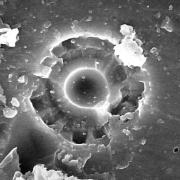 | Article 3 - Mikro moon This crater was discovered on the surface of a sample of lunar volcanic glass. |
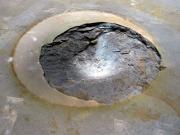 | Article 4 - Solid block This crater formed in a solid block of sandstone as a result of an impact of a steel p ... |
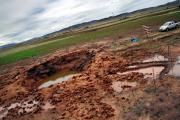 | Article 5 - Carrancas The smallest and youngest crater on the Earth is located in southern Peru. |
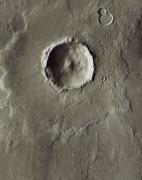 | Article 6 - Bacolor A young crater with well developed central peak and clearly visible ejecta blanket aro ... |
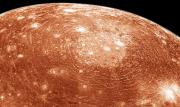 | Article 7 - Valhala The largest crater as yet discovered in the Solar System occurs on Jupiter‘s moon Call ... |
| Article 8 - How to identify it How to identify itTypical signs of collisions of cosmic bodies include:A) Shatter con ... |
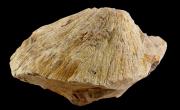 | Article 9 - limestone A limestone shattercone, Steinheim crater, Bavaria, Germany. |
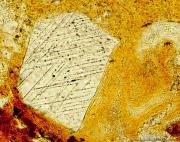 | Article 10 - Shocked quartz grain Shocked quartz grain with two sets of planar deformation features from the Suvasvesi c ... |
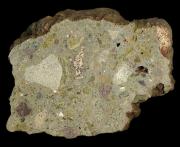 | Article 11 - Popogaj Greenish suevite from the Rochechouart impact crater, France. |
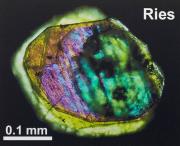 | Article 12 - Suevit The diamond from the Ries crater formed by impact transformation of graphite. |
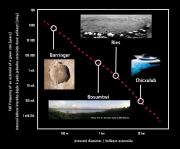 | Article13 - The smaller, the oftener encountered The smaller, the oftener encounteredThe outer space supplies the Earth with as much as ... |